

TopHap
Building a data-rich real estate platform around maps, analytics, and property intelligence
From an early-stage PropTech startup to a real estate intelligence platform powering experiences at Realtor.com
TopHap
Industry
Platform
Services
Team
Anton Danilovich – CEO
Dennis Khvostionov – CTO
Mischa Serlin – VPE
Lana Orlova – PM
Product Vision & Design Challenge
The Product Idea
Most real estate websites are built around listings. TopHap was built around understanding property.
That distinction shaped almost every design decision. A listing can show you the price, number of bedrooms, square footage, and photographs. But real estate decisions depend on much more: the surrounding market, comparable sales, neighborhood trends, lot characteristics, terrain, environmental risks, permits, and other signals that can affect a property.
The opportunity was to bring these signals together and make them understandable within one environment.
TopHap’s value was not simply access to more data. It was the ability to see relationships inside that data.
The Design Challenge
The same thing that made TopHap powerful also made it difficult to design.
Its data came in different forms, scales, and levels of importance. Simply adding more tables, dashboards, and controls would not make that complexity easier to understand.
The experience needed to feel analytical without feeling heavy or overwhelming — dense with information, but never chaotic.
The central design question became:
How can we make professional-grade real estate intelligence feel visual, exploratory, and immediate?
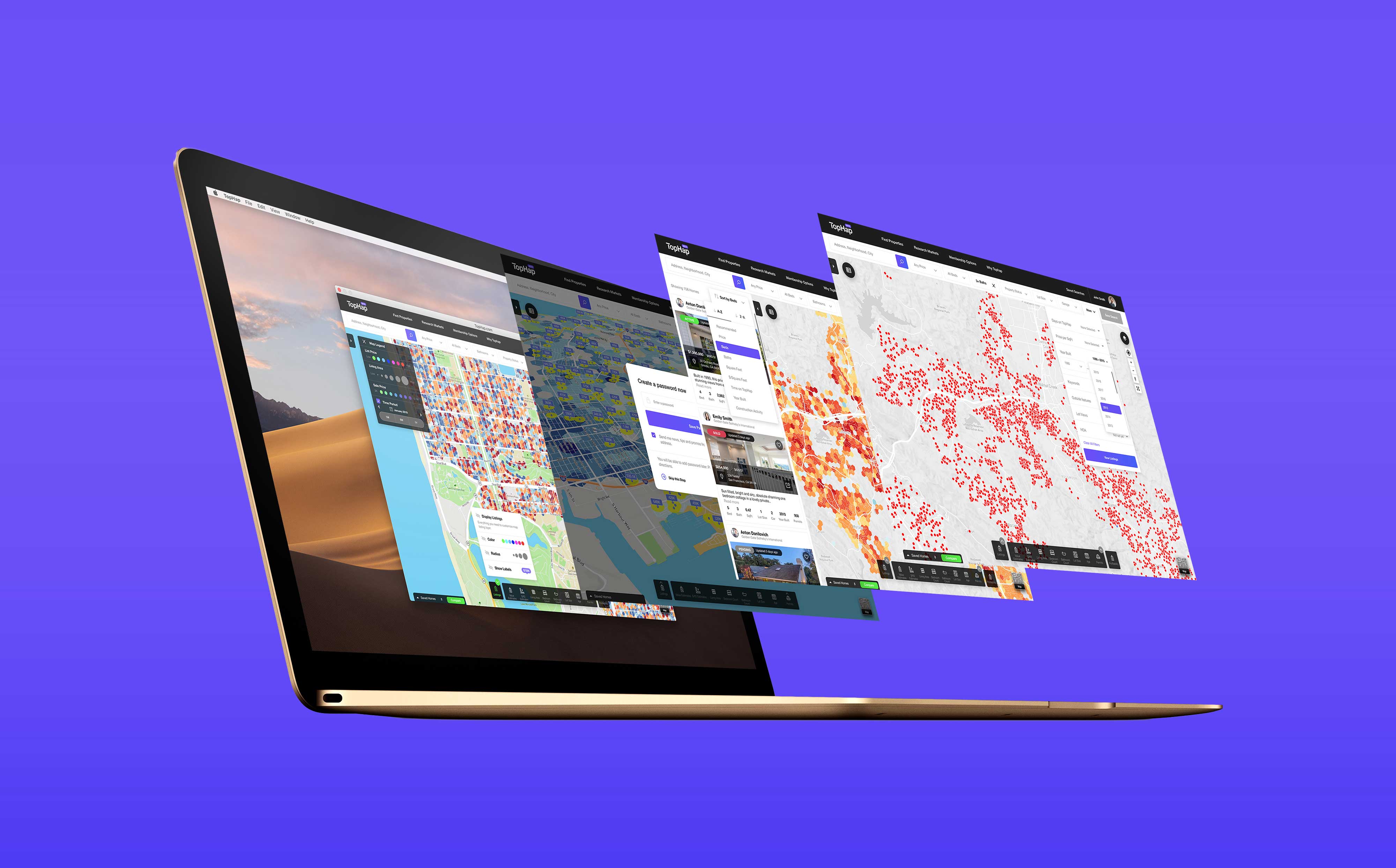
I joined TopHap at an early stage in 2018 and worked on the product through 2026 as Chief Designer, in a role that was broad and deeply hands-on.
I designed the product across its evolution — from the core desktop platform and map-based property research experience to data visualizations, analytical tools, property pages, reports, mobile interfaces, and the visual systems that connected them.
I worked closely with Dennis Khvostionov, CTO, whose vision for technology and the real estate market helped shape the product direction, and Anton Danilovich, CEO, whose experience as a real estate professional kept the product grounded in real-world agent workflows.
What started as an ambitious idea for visual real estate analytics gradually developed into a nationwide property intelligence platform.
Years later, TopHap technology became part of an even larger consumer real estate experience: Realtor.com introduced its immersive FlyAround feature as powered by TopHap, while Google Maps Platform described TopHap as Realtor.com’s implementation partner for immersive 3D mapping.
My work at TopHap was about building a flexible design foundation that could evolve with the company — across platforms, technologies, use cases, and scale.
Making the U.S. Real Estate Market Visible
TopHap began as a California-focused visual real estate analytics product and gradually expanded into nationwide property intelligence.
The Map as a Workspace.
The most important design decision was to make the map the center of the product.
It gave listings, market data, environmental risks, terrain, and analytical layers a shared geographic context, allowing users to investigate the market without constantly switching between maps, reports, and tables.
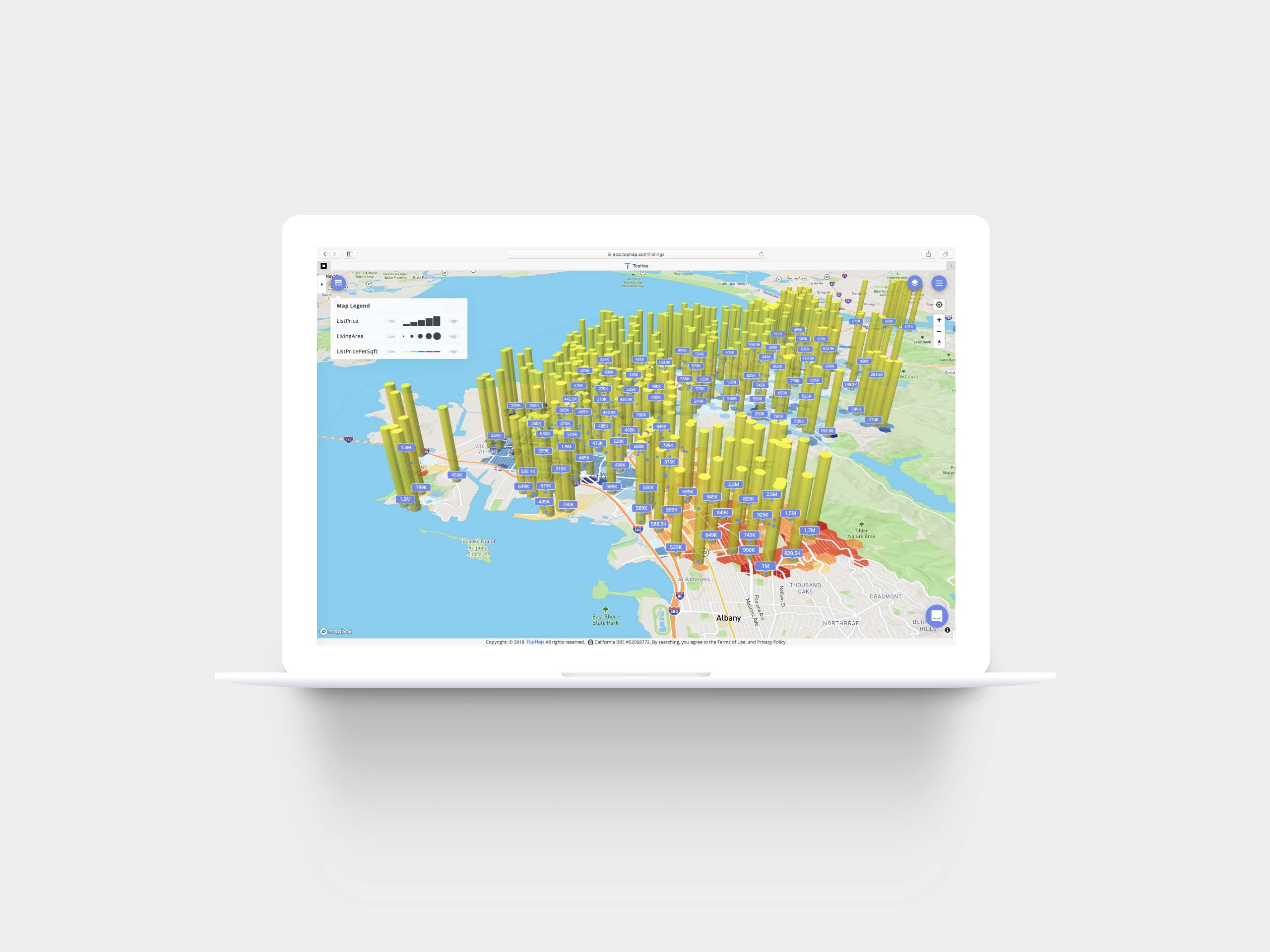
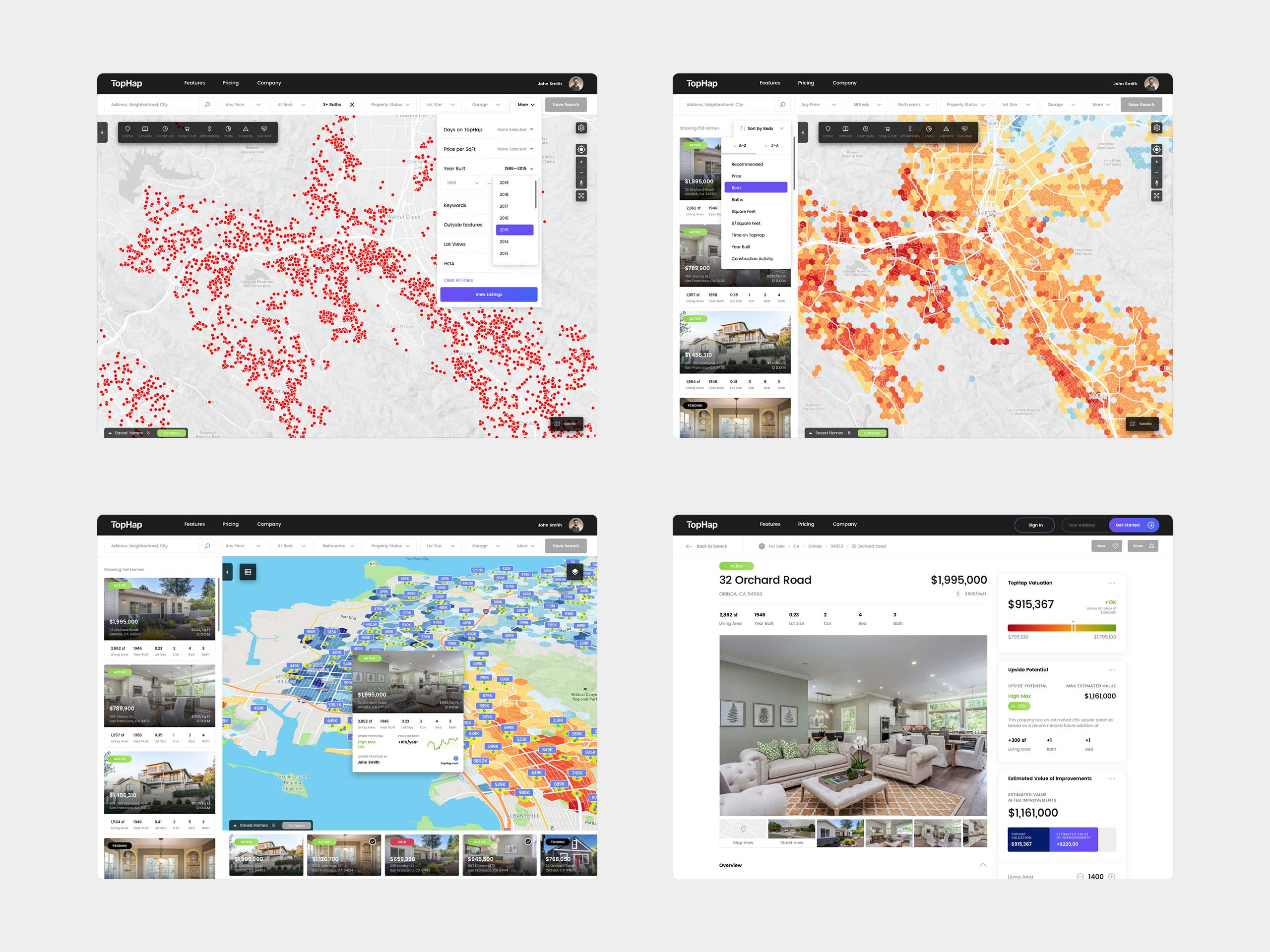
TopHap also translated data into geographic patterns. Color-coded hexagons, boundaries, and property cells made thousands of values easier to scan and compare, while terrain and topography added another layer of context.
The map became a way to interrogate geography through data.

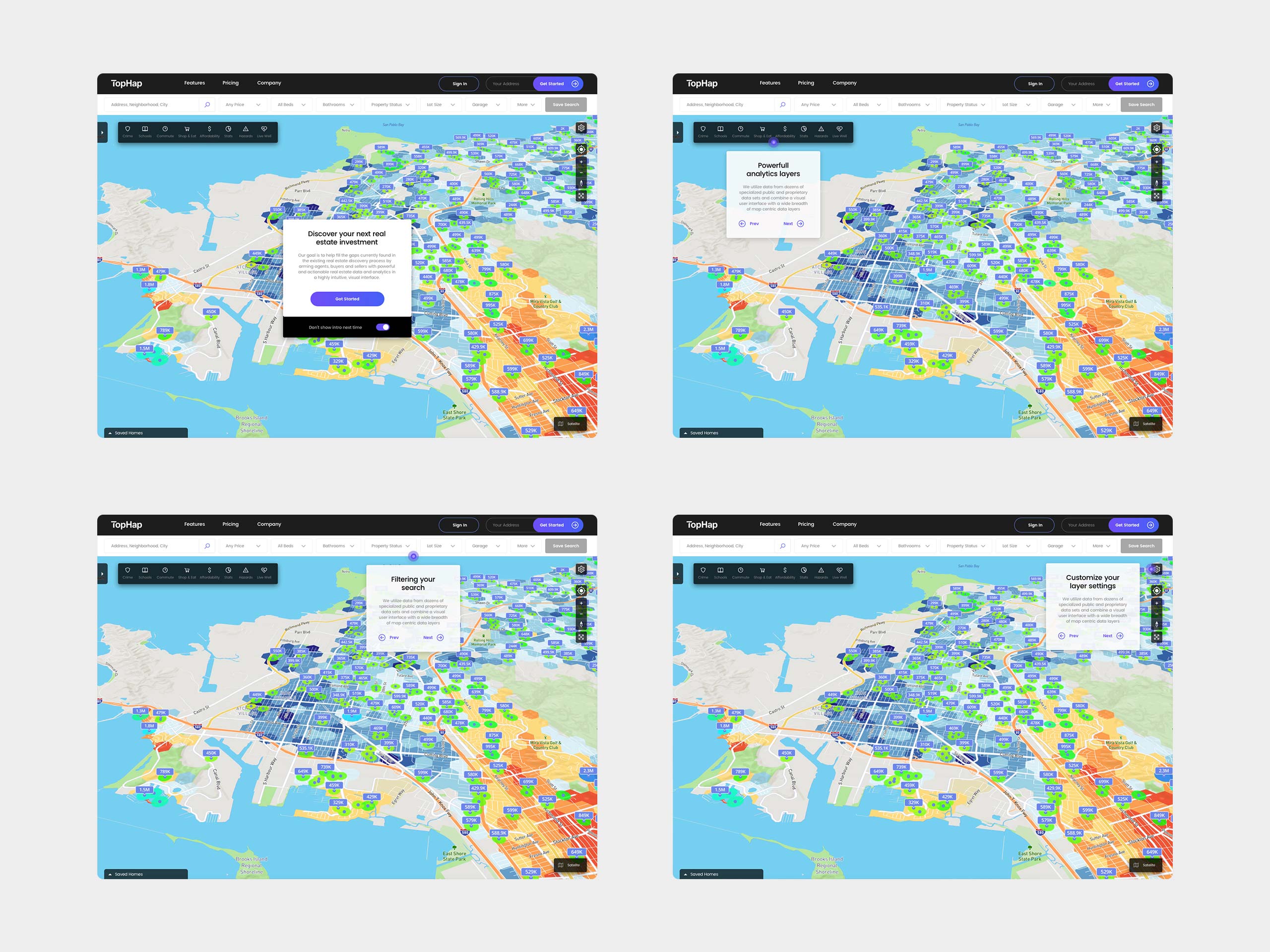
The First Product Explorations
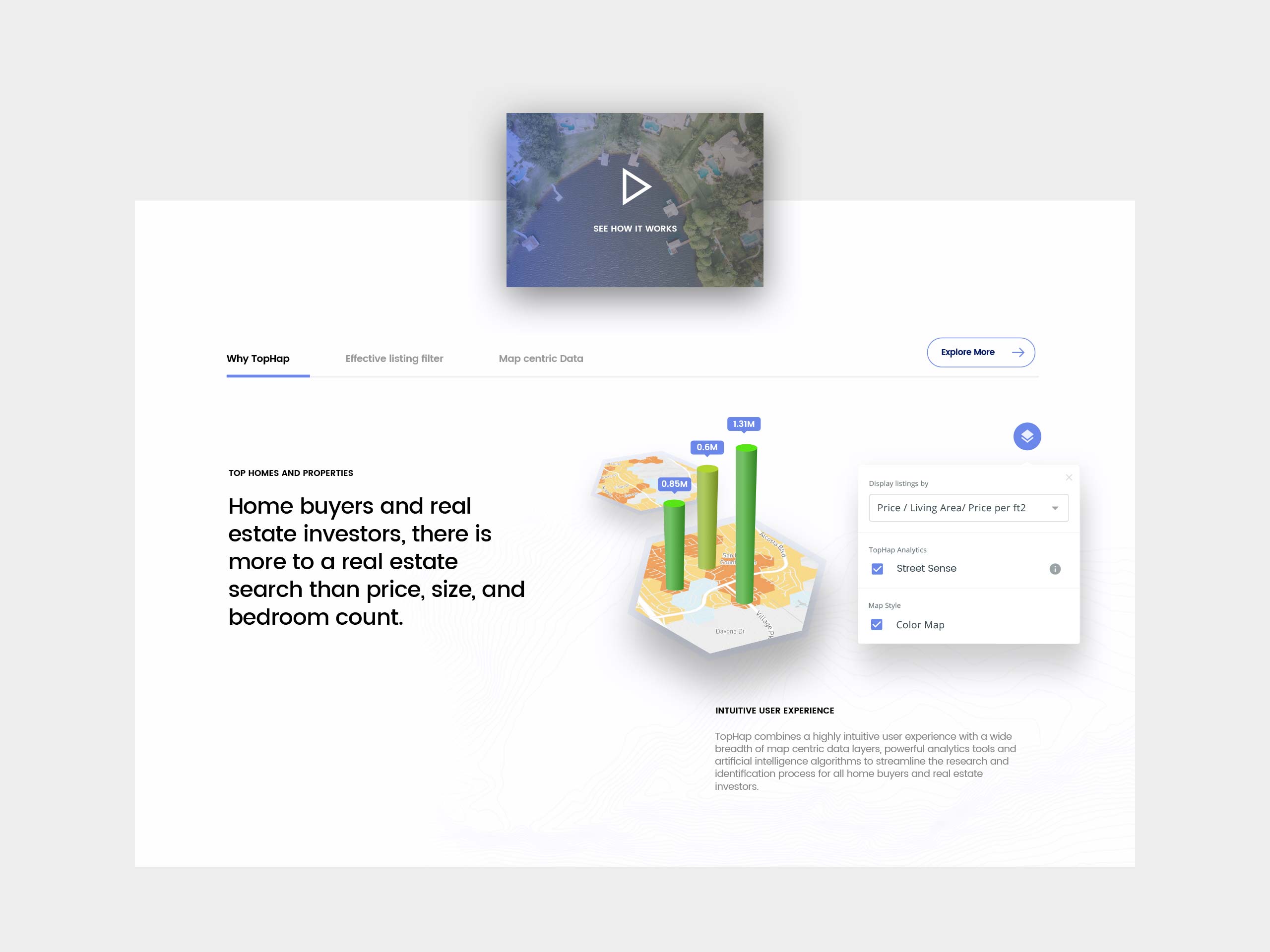
Early concepts explored how real estate data could become a visual, map-first experience, shaping the foundations of TopHap’s interface, analytics, and spatial approach to property research.
A Layered Information System
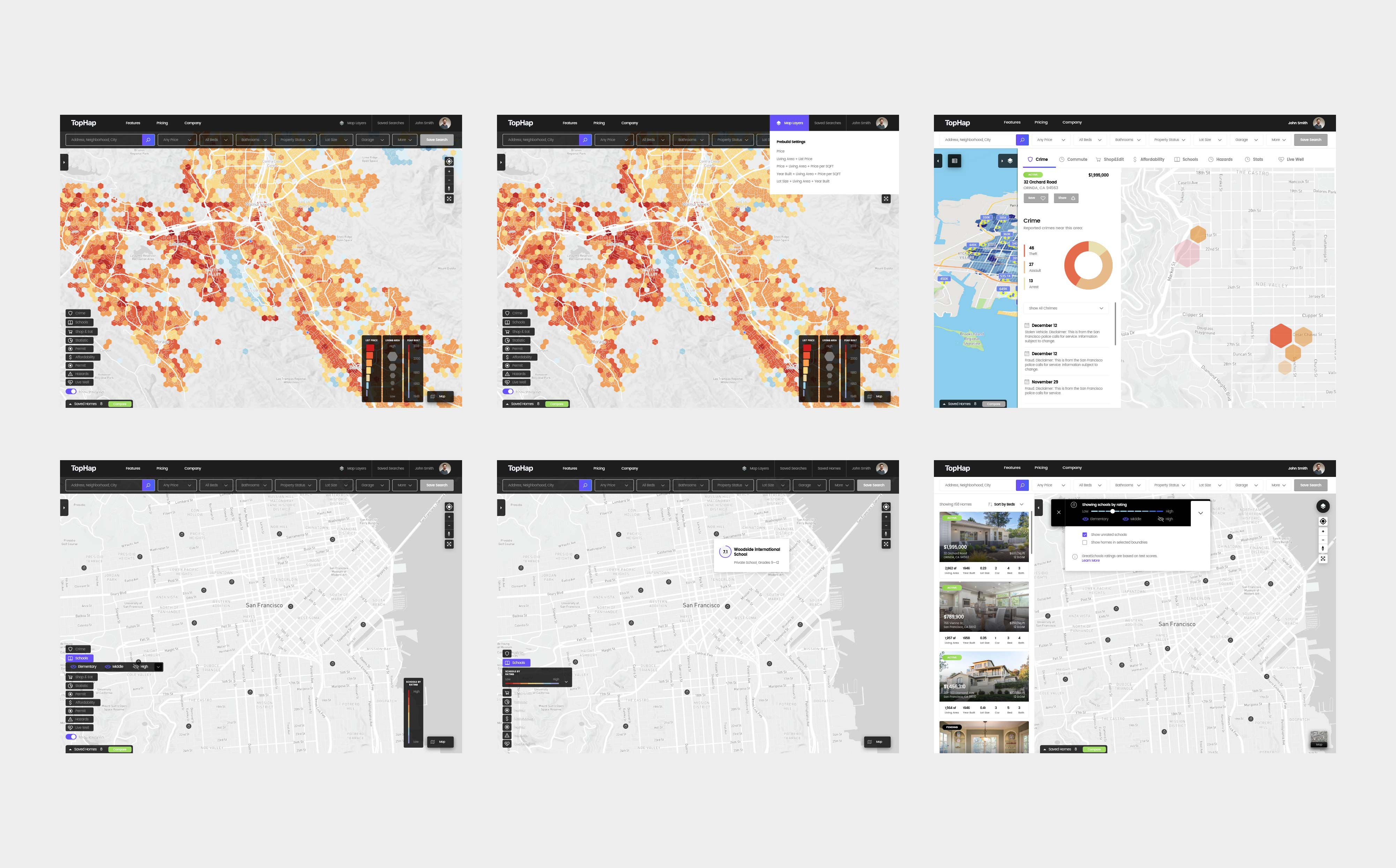
TopHap was designed as a layered system so users could focus on the data that mattered without seeing everything at once.
Eight core layer groups — Value, Property Data, Region, Hazards, Market, Investment, Community, and School — offered different views of the same geographic area. From there, users could filter, compare, select a property, and move into deeper details.
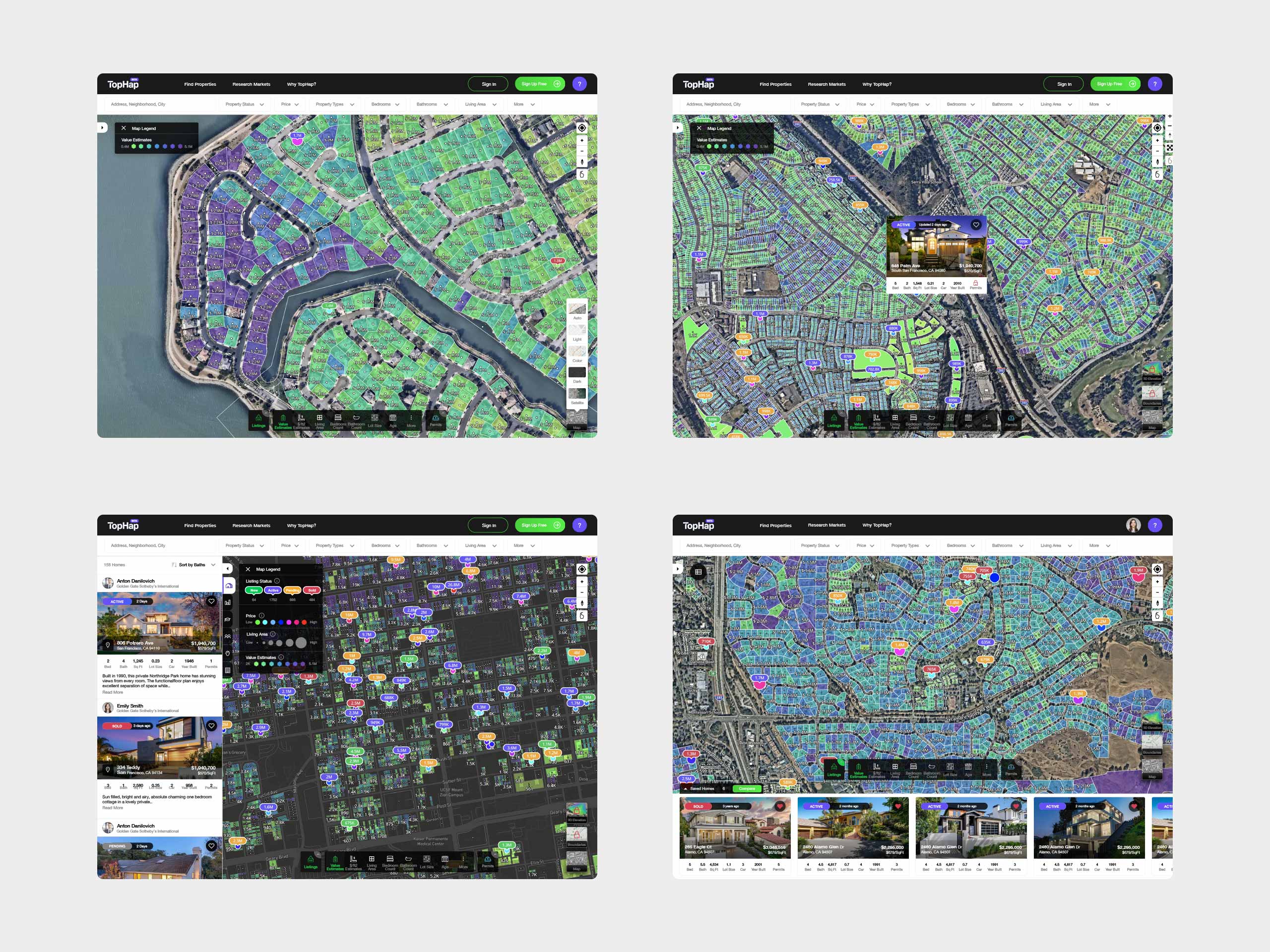
Designing for Comparison
Real estate research is inherently comparative.
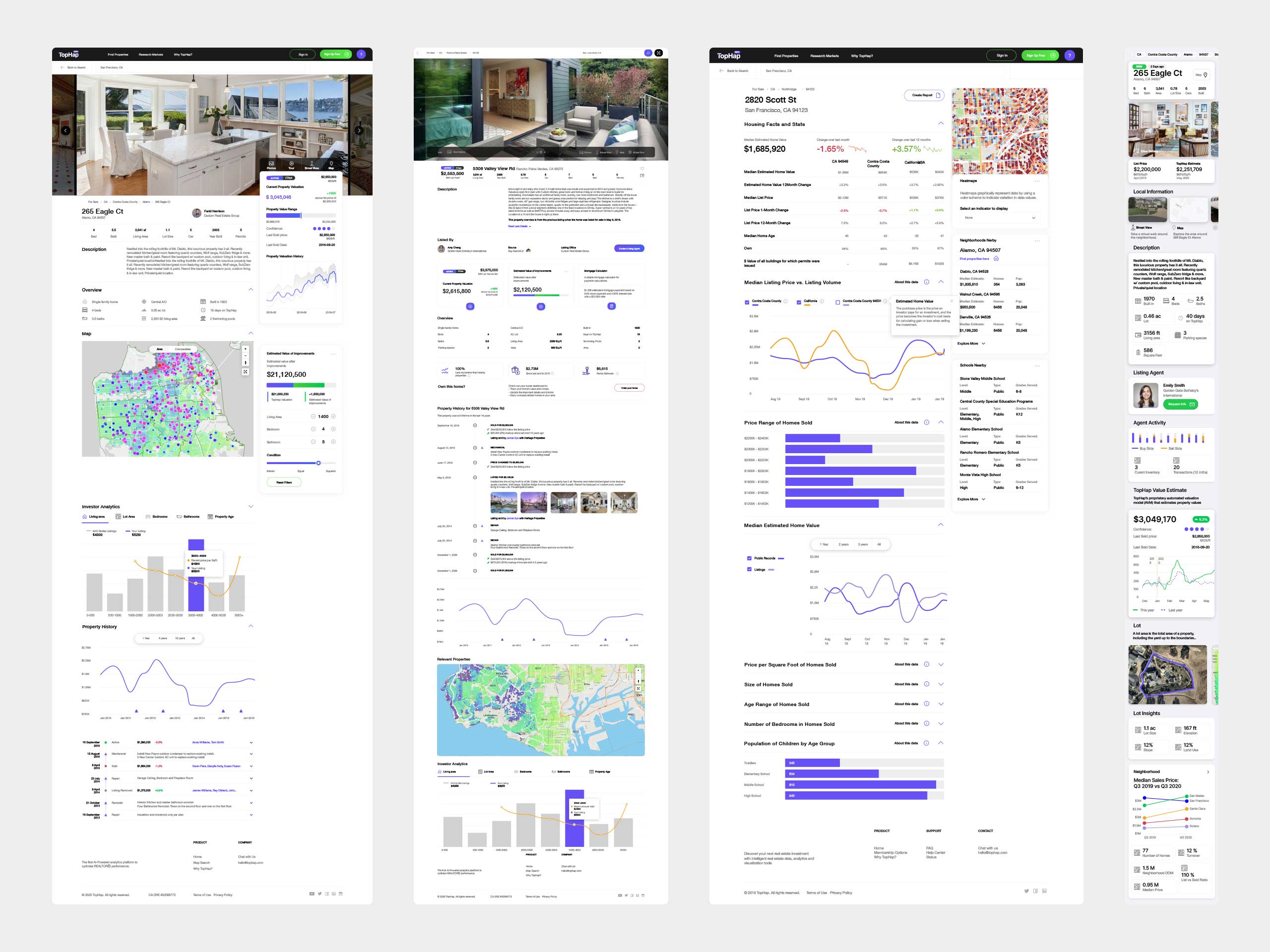
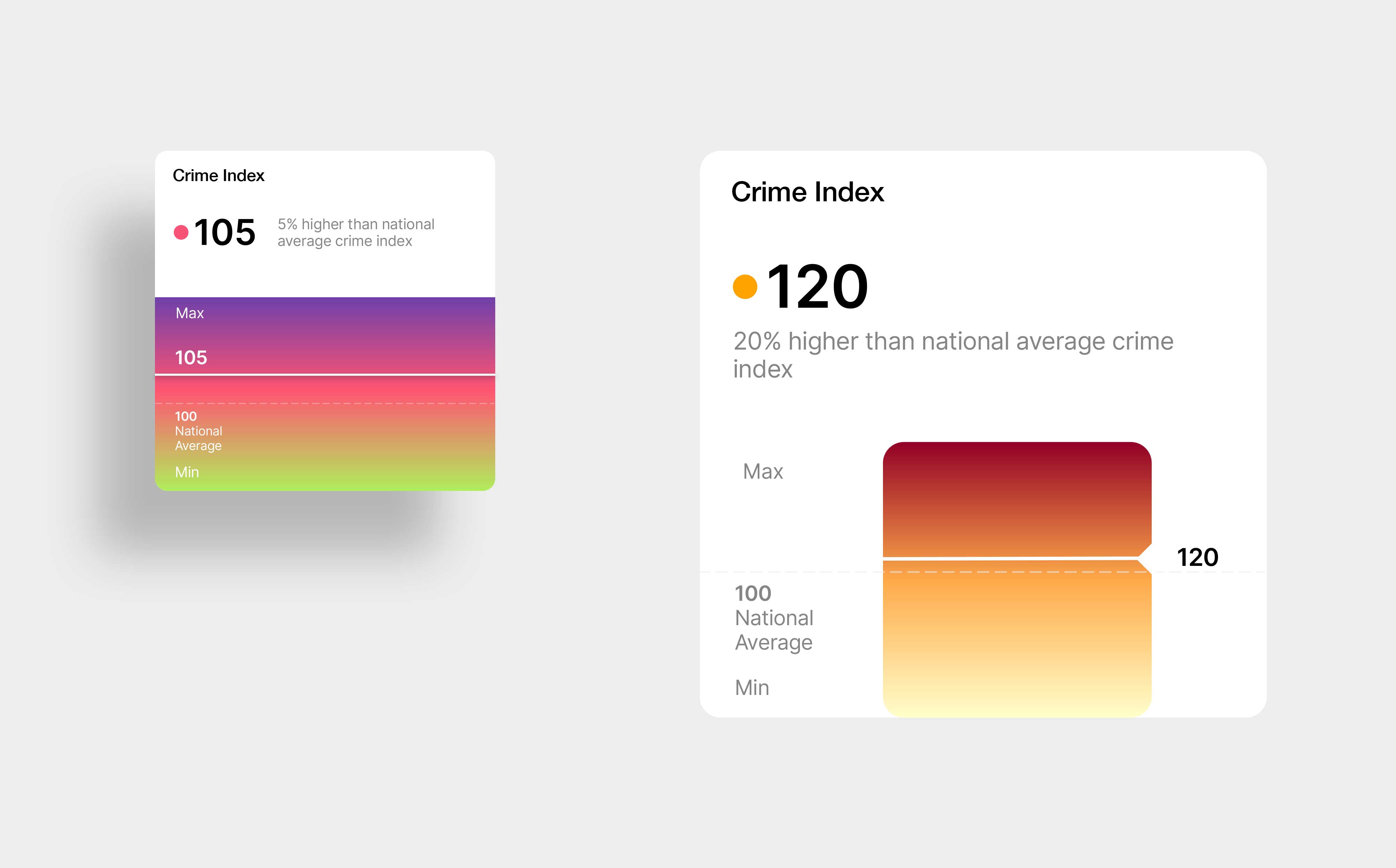
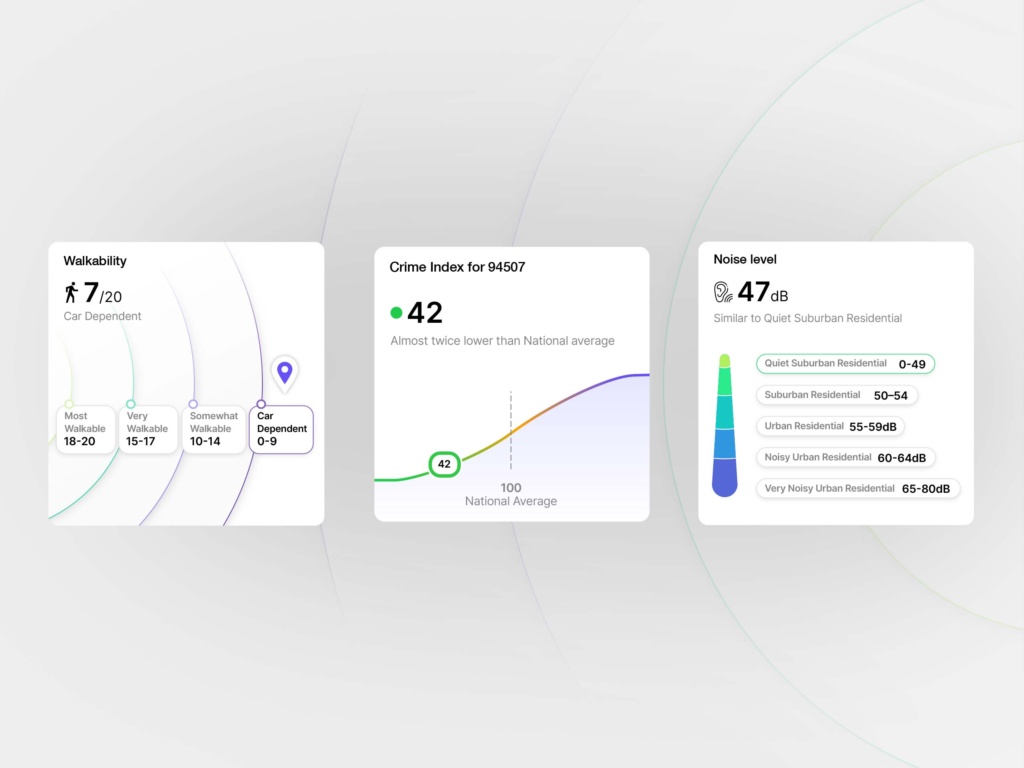
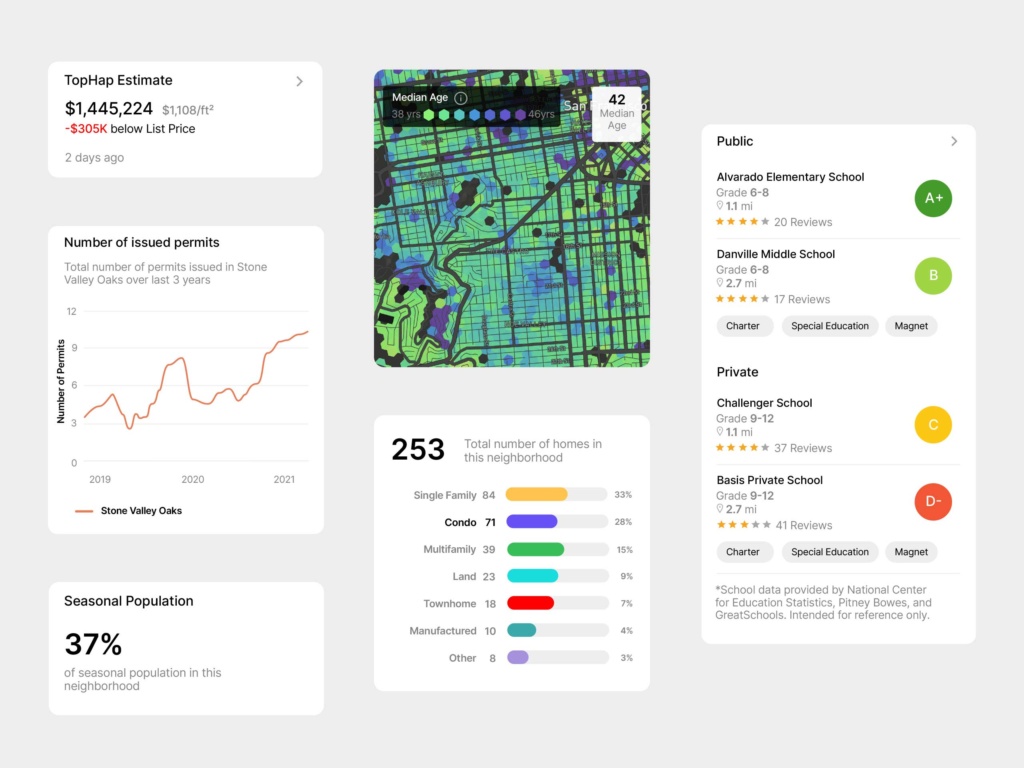
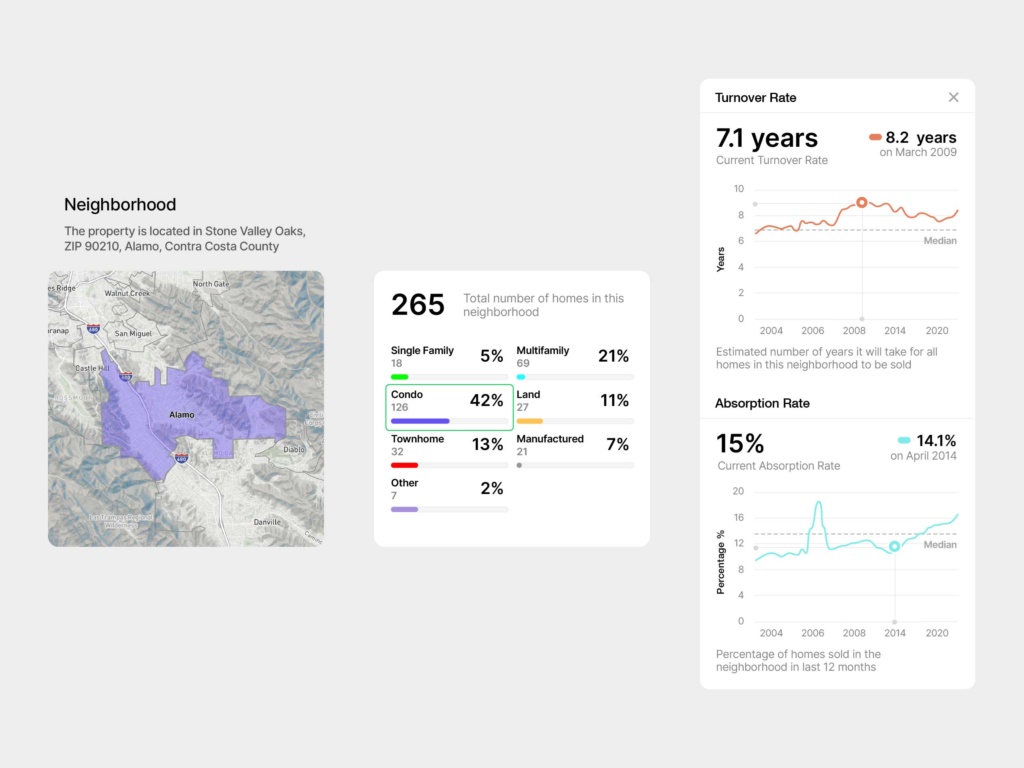
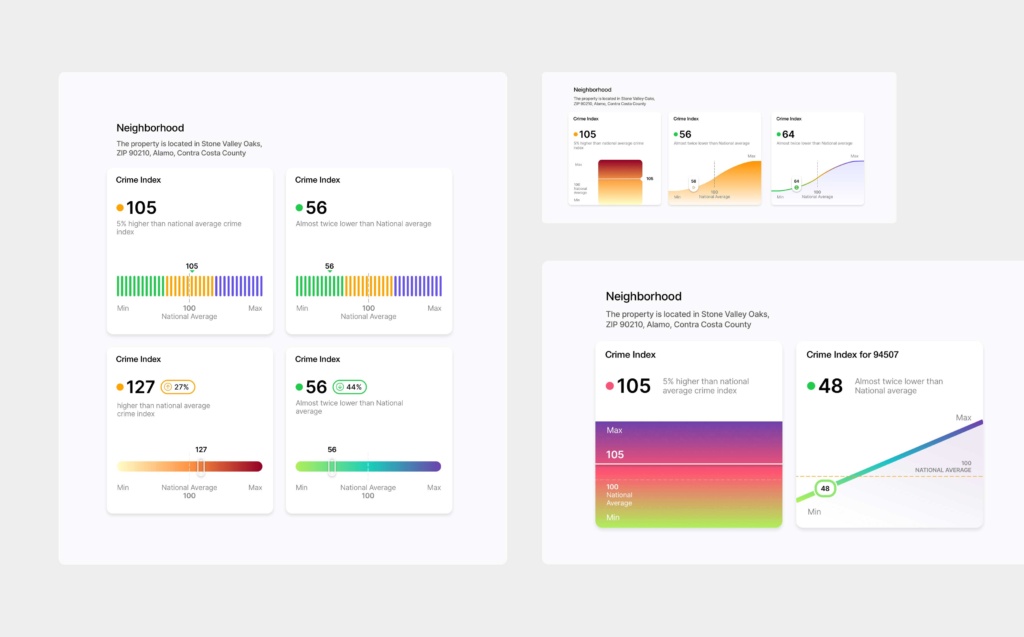
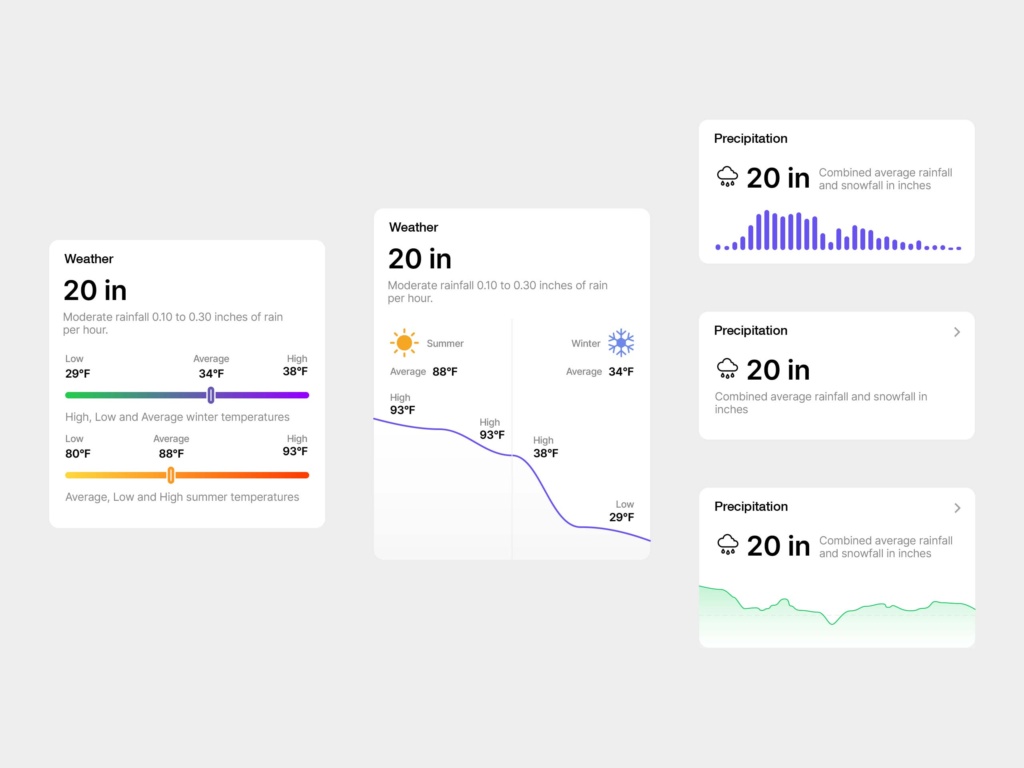
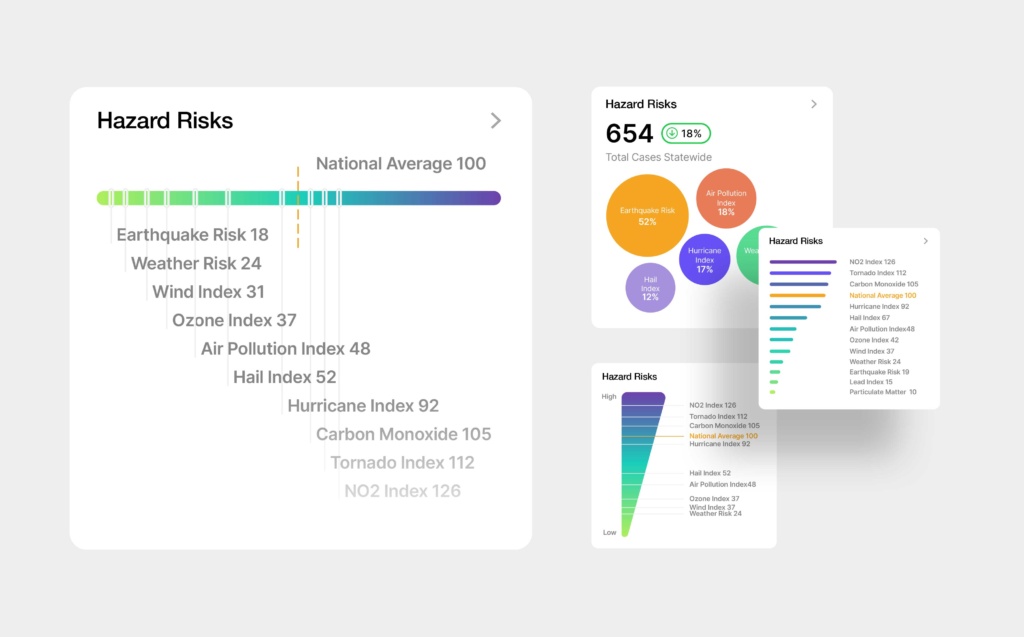
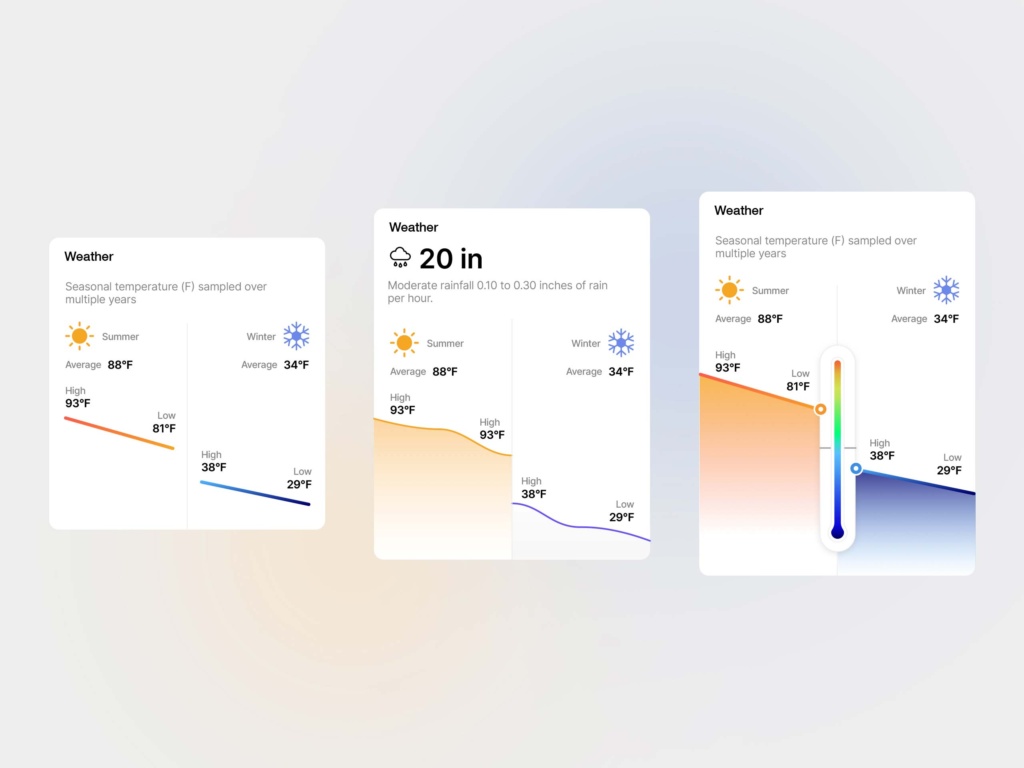
The interface supported this through consistent cards, charts, legends, and map layers, making it easier to compare properties, neighborhoods, and market conditions across datasets.
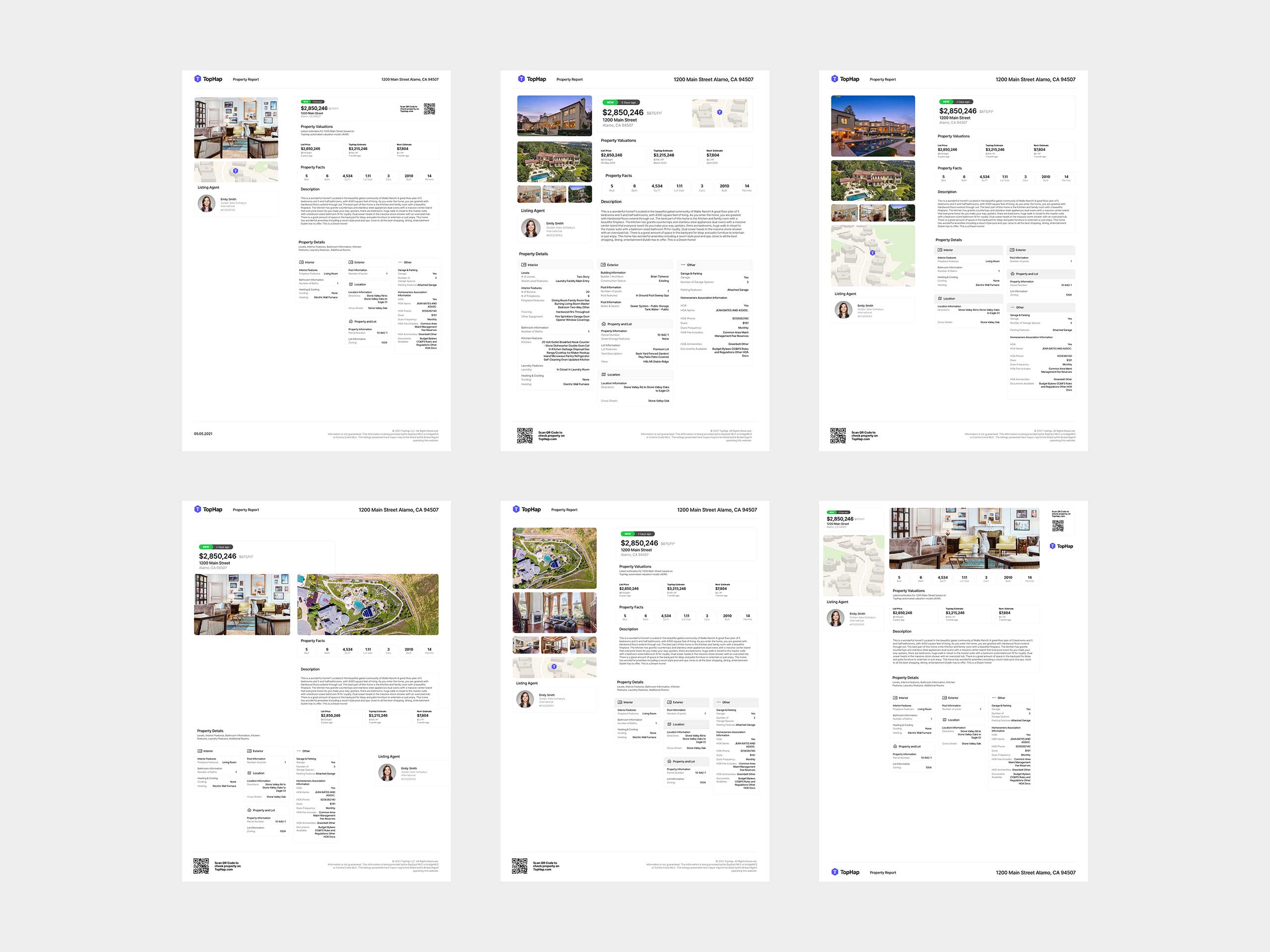
A property was presented as a collection of signals — from basic characteristics and valuation data to market history, location intelligence, and surrounding conditions — helping users build a more complete picture before making comparisons.
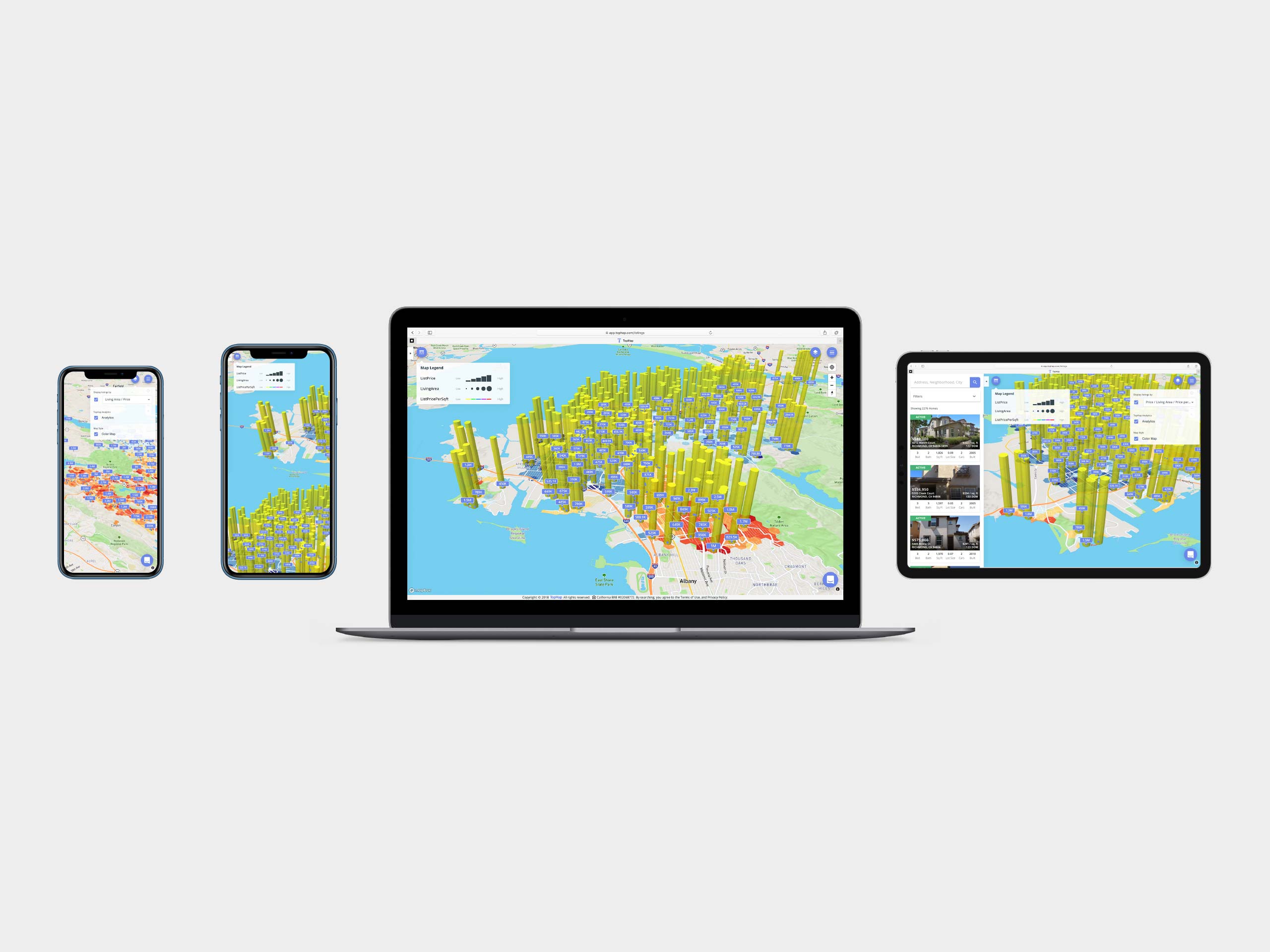
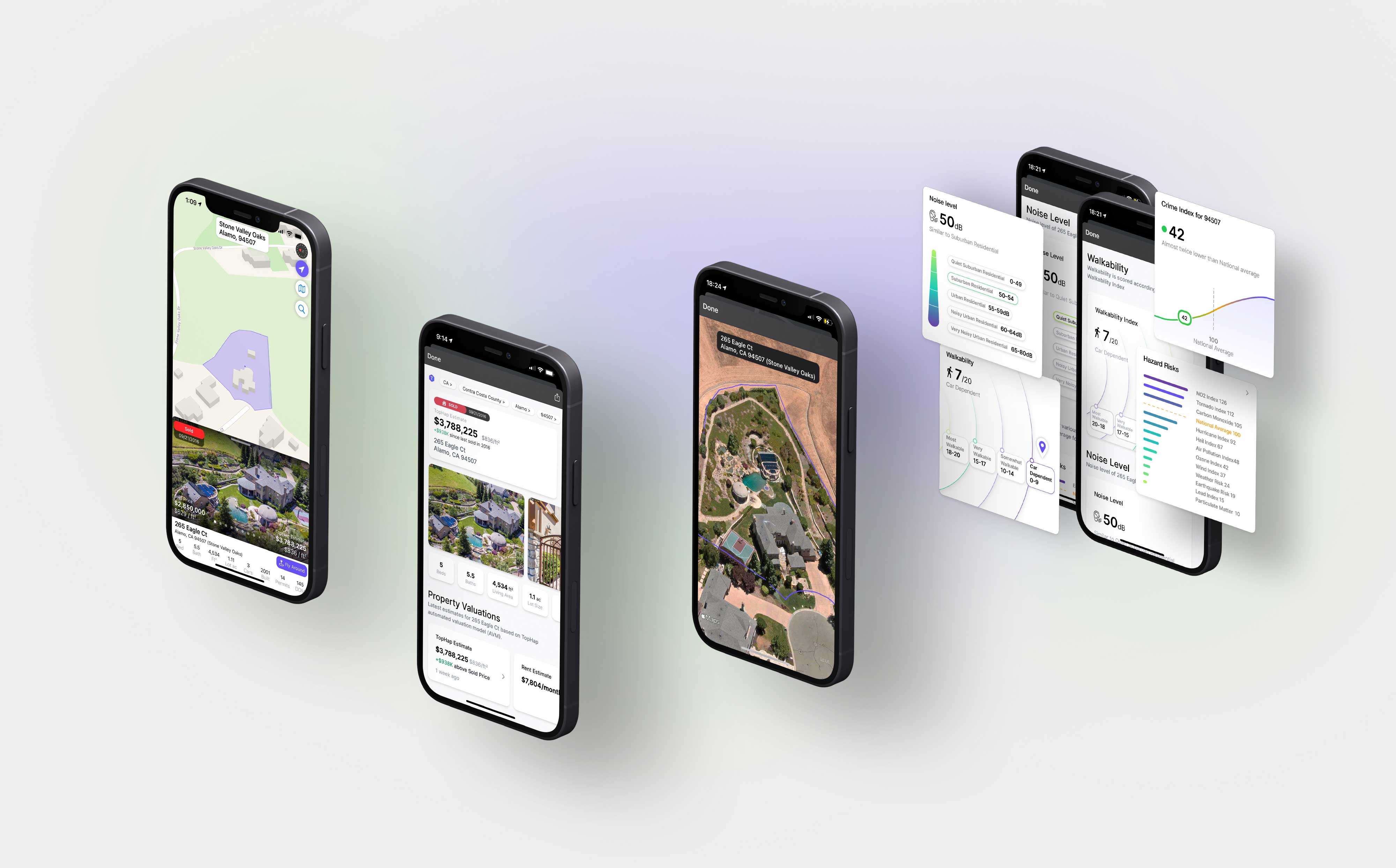
TopHap Explorer iOS application
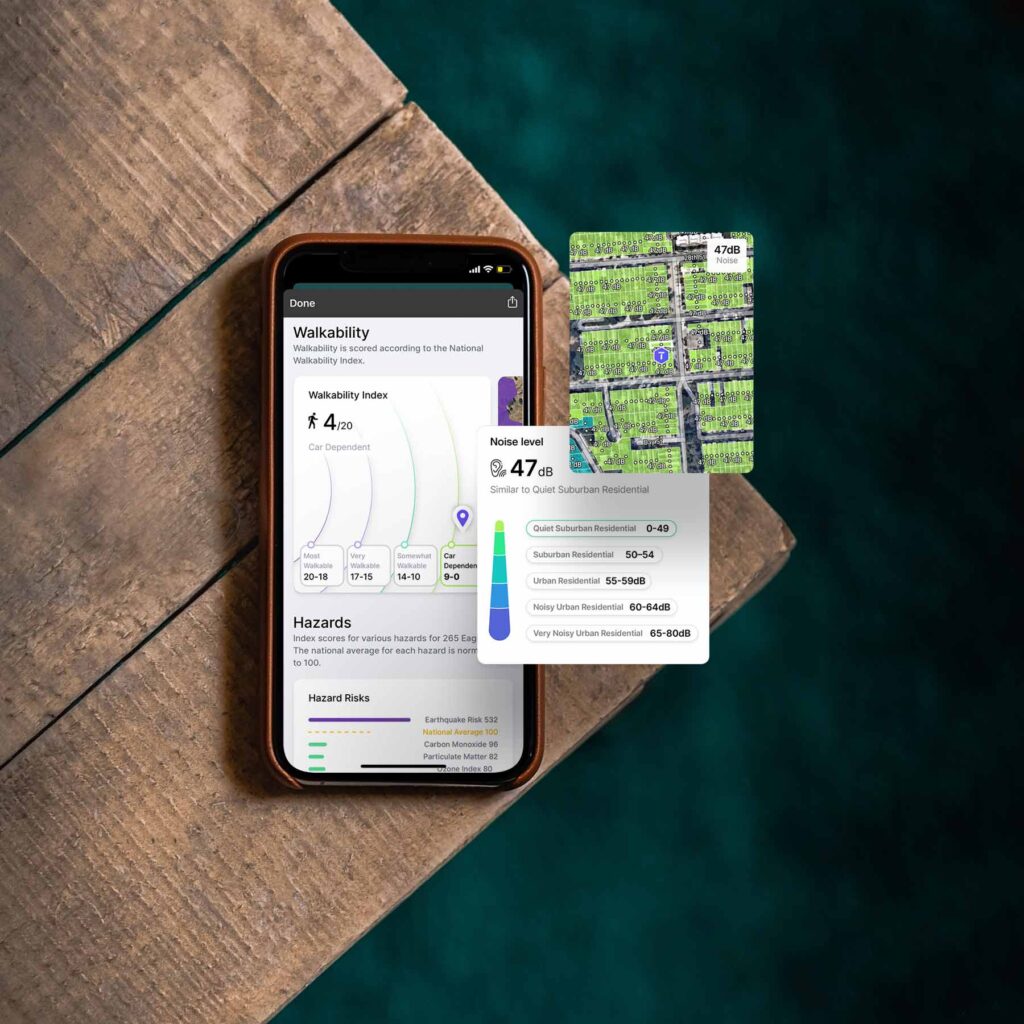
TopHap Explorer turns real estate intelligence into a mobile, map-first experience. Built for exploring properties and neighborhoods in context, the app brings complex market and location data into a fast, visual tool designed for decisions on the move.
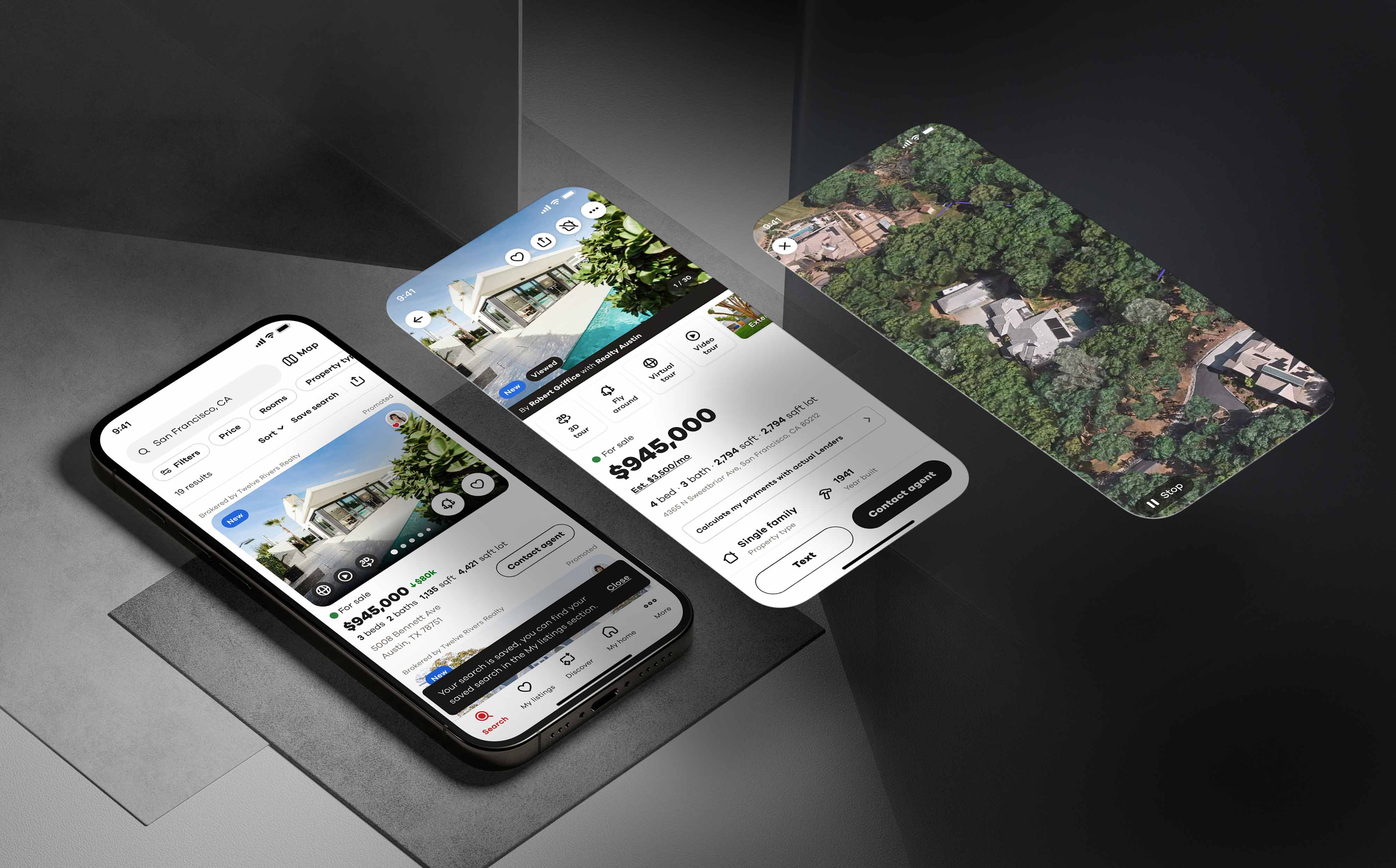
Realtor.com
Bringing Dynamic Data Layers to RealView™ Maps
TopHap’s approach to map-based real estate analytics later reached Realtor.com’s RealView™ experience, where dynamic layers helped users explore property data directly in geographic context.
2
X
Homebuyers using Realtor.com’s dynamic maps were twice as likely to submit a lead.
40
%
Users who engaged with the maps generated 40% more visits per day.
Source: Realtor.com, Dynamic Map Layers, 2024

Outcome
What began as a California-focused real estate analytics product grew into a nationwide property intelligence platform.
The product design evolved with it — from early map experiments into a connected framework for property research, analytical layers, data visualization, reports, mobile experiences, and immersive mapping.
TopHap’s technology eventually reached a much larger consumer audience through Realtor.com, where its mapping capabilities became part of experiences including RealView™ and FlyAround.
The outcome was a collective achievement. I worked alongside a highly skilled team across engineering, product, technology, and real estate, with each person bringing deep expertise to the product.
My contribution was designing a flexible product foundation that could keep evolving with the technology, the market, and the scale of the company — from an early-stage startup to real estate intelligence at national scale.
Disclaimer:
This project is presented for portfolio and case study purposes only. TopHap.com, Realtor.com, their respective trademarks, brand assets, photography, editorial content, and any third-party materials remain the property of their respective owners. No ownership or rights to any third-party content, trademarks, or intellectual property are claimed.
Explore More Work

Revolution Golf
Revolution Golf

Curiosity
Curiosity

Leavenworth
Leavenworth
Independent Journal Review
Independent Journal Review
TopHap Marketing
TopHap Marketing

Stuhrling Original