

Penguin Random House redesign
A pitch concept translating newly aligned corporate and consumer strategies into one connected digital experience.
IBM Interactive Experience
Industry
Platform
My Role
Team
Joanna Peña-Bickley / CCO
Jennifer Lindstrom / Partner GBS
Angie Sailo / Sr.Writer
Featured on
Behance
Show details
The brief
Penguin Random House wanted to rethink its digital presence and create a more engaging experience for readers, authors, and corporate audiences.The goal was to translate the company’s newly aligned strategy into a clear, modern, and recognizable website.
The challenge
Penguin Random House had a vast catalogue and several established publishing brands, each with its own audience and identity.
The challenge was to create one connected experience that made discovery feel personal and brought readers and authors closer together—while serving the distinct audiences identified in the brief without losing the character of each brand.
The Overview
I joined the project remotely as a Senior Product Designer, working directly with Joanna Peña-Bickley.
The team was briefed on April 28, with the final RFP response due on May 2. Within this compressed timeframe, I translated the strategic requirements into tangible experience and interface concepts and designed every page shown in this case study. I refined the work through several rounds of review, incorporating feedback from Joanna and the wider team while keeping the designs aligned with the project brief and stakeholder requirements.
Direction °1
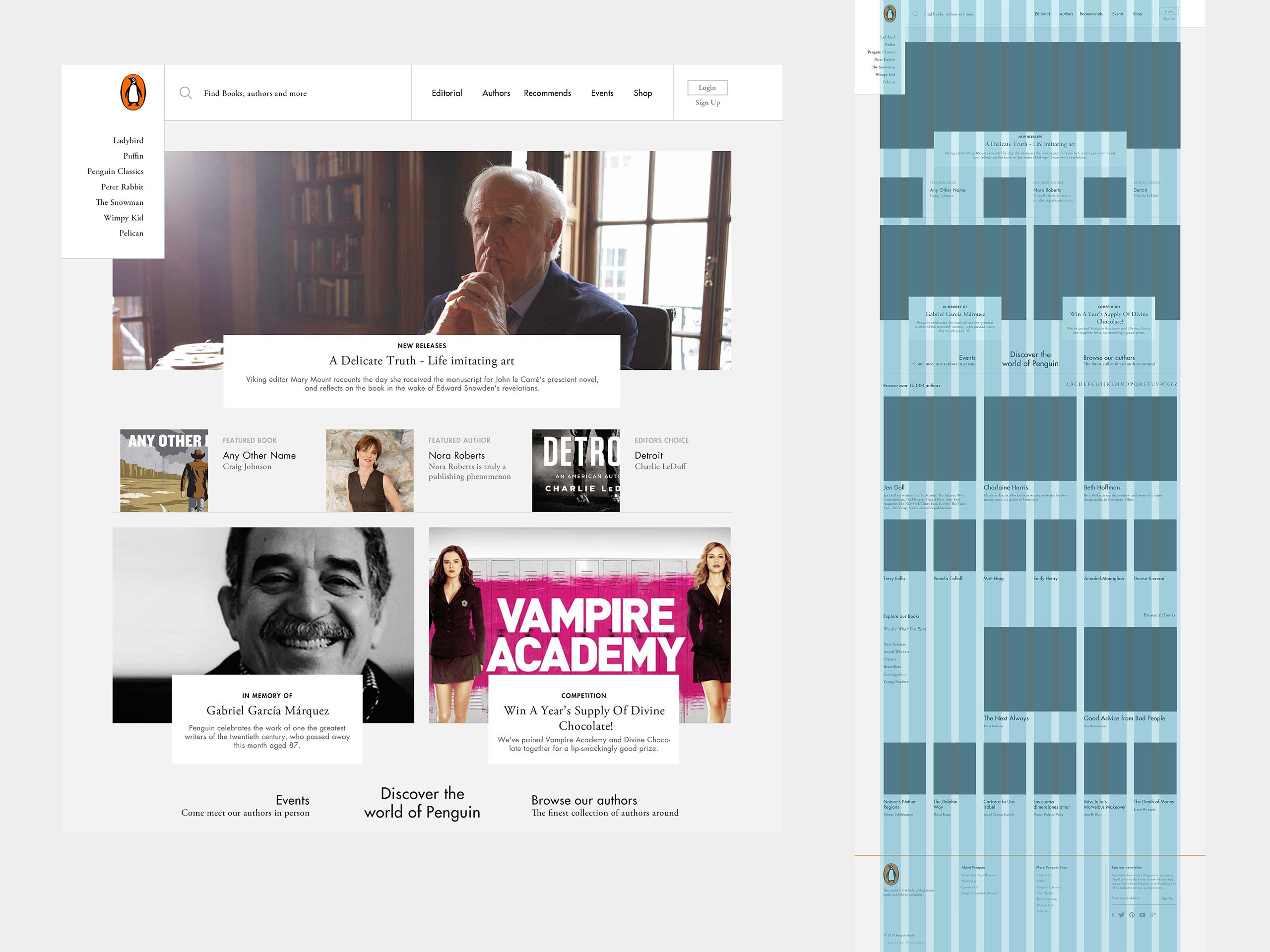
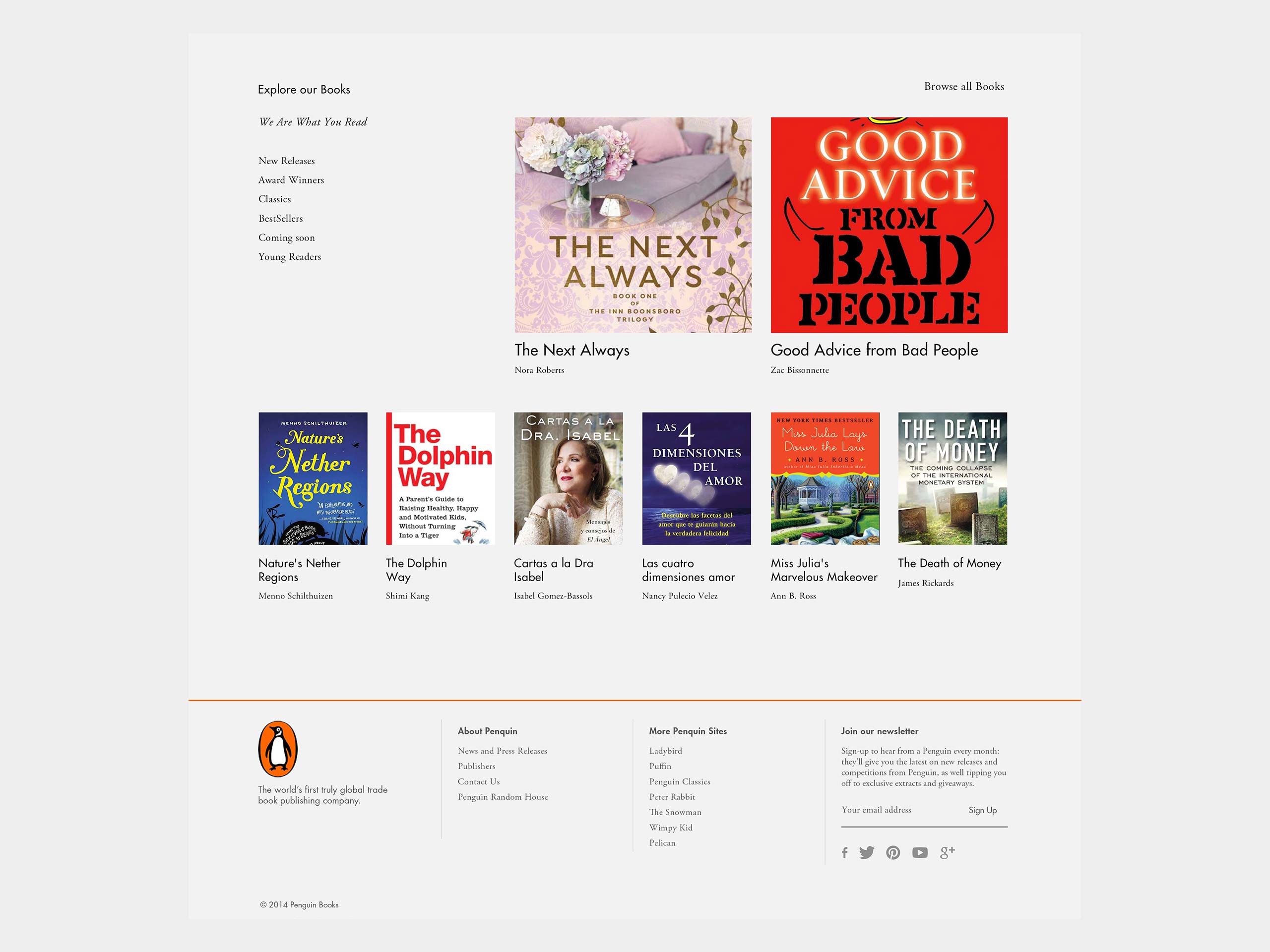
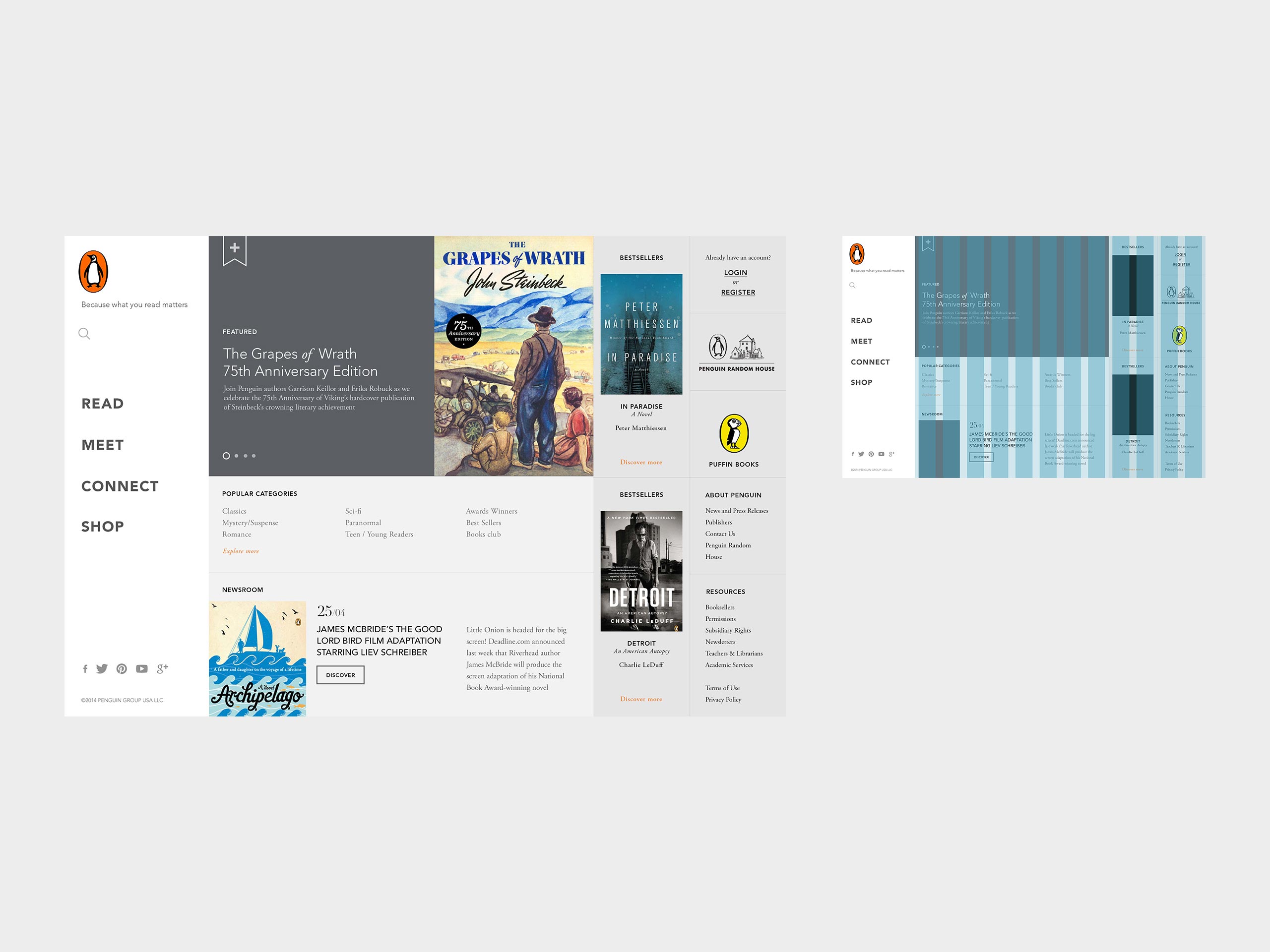
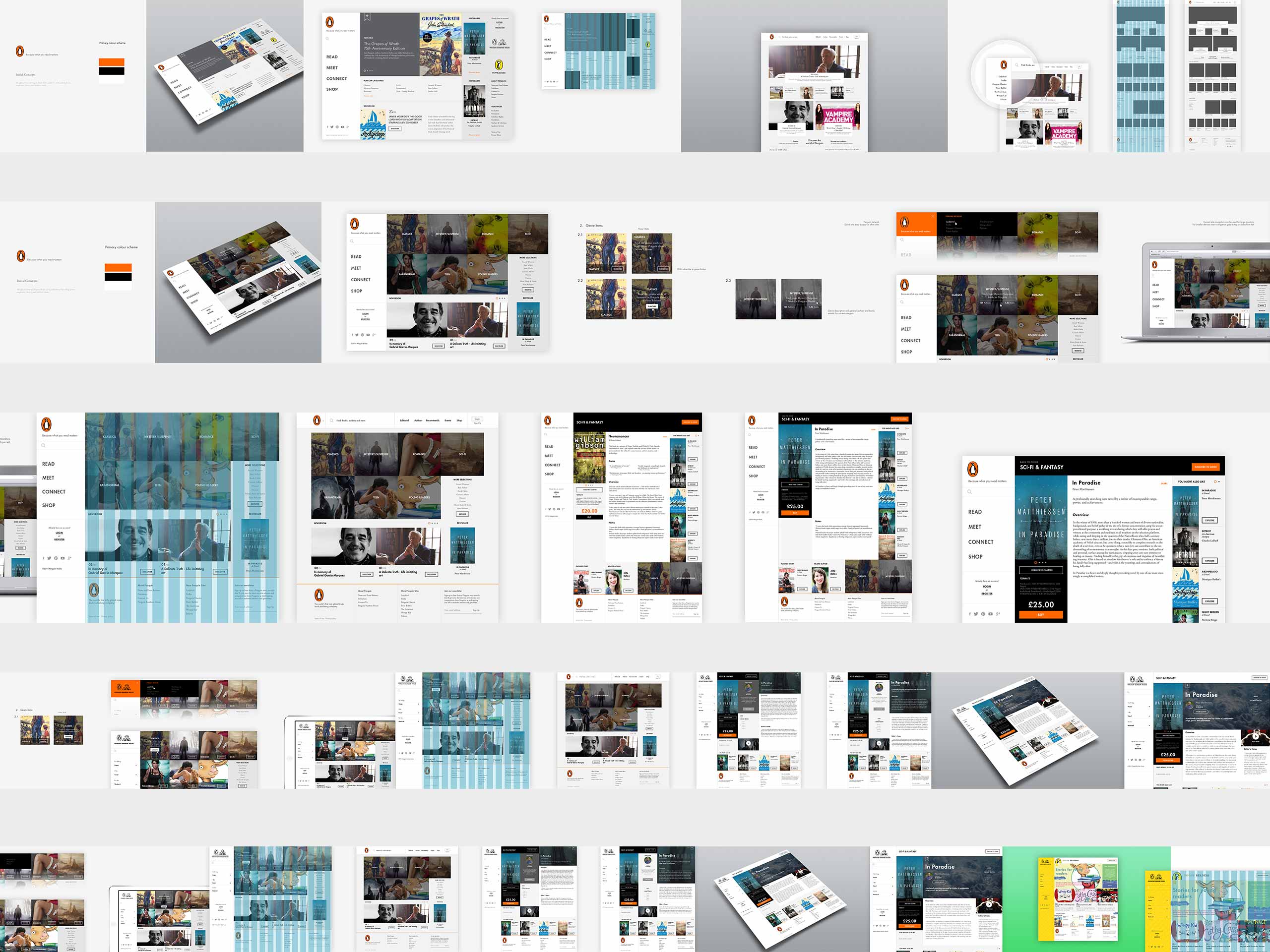
I developed several rapid creative directions before one was selected for further development. Each tested a different grid, content structure, and visual hierarchy —exploring how the experience could balance the authority of a global publisher with the emotional pull of discovering a new story.
Direction °2
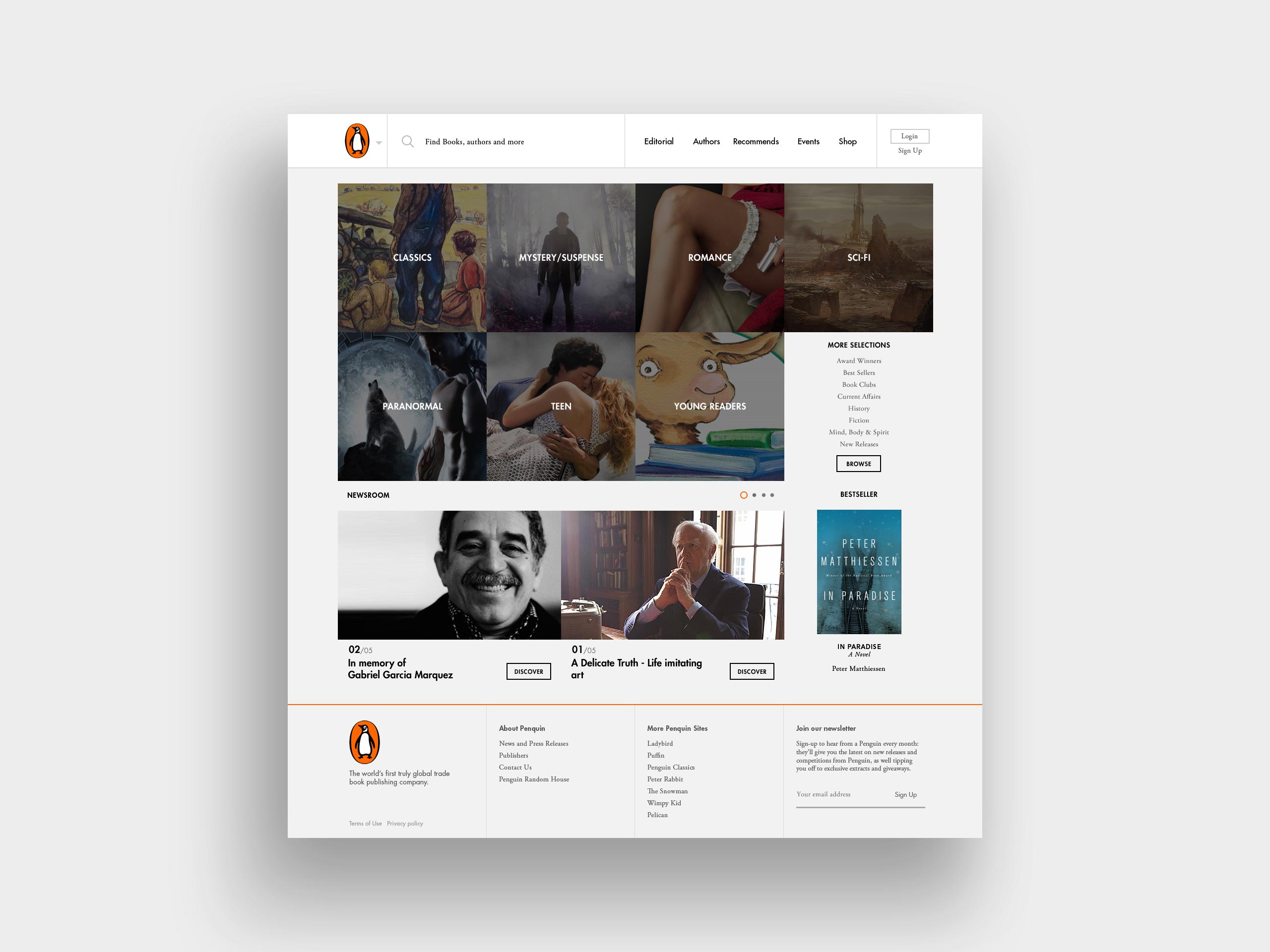
From initial directions to a design system
Direction 2 was selected as the foundation for the proposal. I developed the concept through several rounds of review, incorporating feedback while refining the navigation, information hierarchy, content presentation, and visual system.
The proposal combined bold editorial typography, expressive imagery, and a modular page framework. I extended the system across the homepage, genre pages, a book-detail page, and a dedicated Young Readers experience—demonstrating how distinct content types and audiences could come together within one coherent ecosystem.


Proposal Outcome
The final proposal demonstrated how Penguin Random House could operate as one connected digital ecosystem — balancing institutional credibility with a more human, editorial experience for readers.
Rather than presenting a fixed collection of pages, the concept established a flexible foundation for organizing stories, genres, audiences, and future content.
Disclaimer:
This independent portfolio case study presents an unlaunched visual design concept created as part of an IBM Interactive Experience pitch to Penguin Random House. The visual direction and all page designs shown here were created by me in response to the project brief, requirements, and team feedback. This is not an official publication of IBM or Penguin Random House and does not imply any current affiliation, endorsement, or sponsorship. All third-party trademarks and materials remain the property of their respective owners. No ownership of third-party materials is claimed.
Explore More Work
Stuhrling Original
Stuhrling Original
TopHap Marketing
TopHap Marketing
Realtor.com
Realtor.com
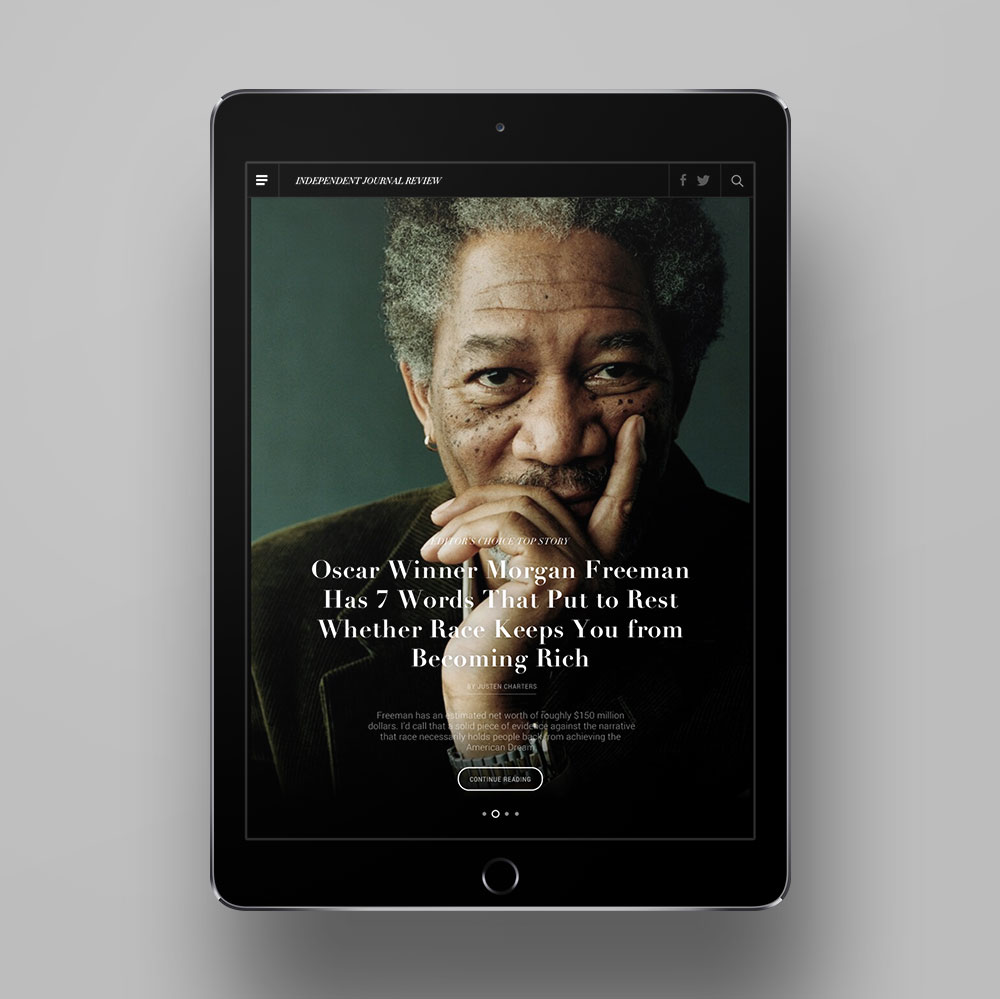
Independent Journal Review
Independent Journal Review
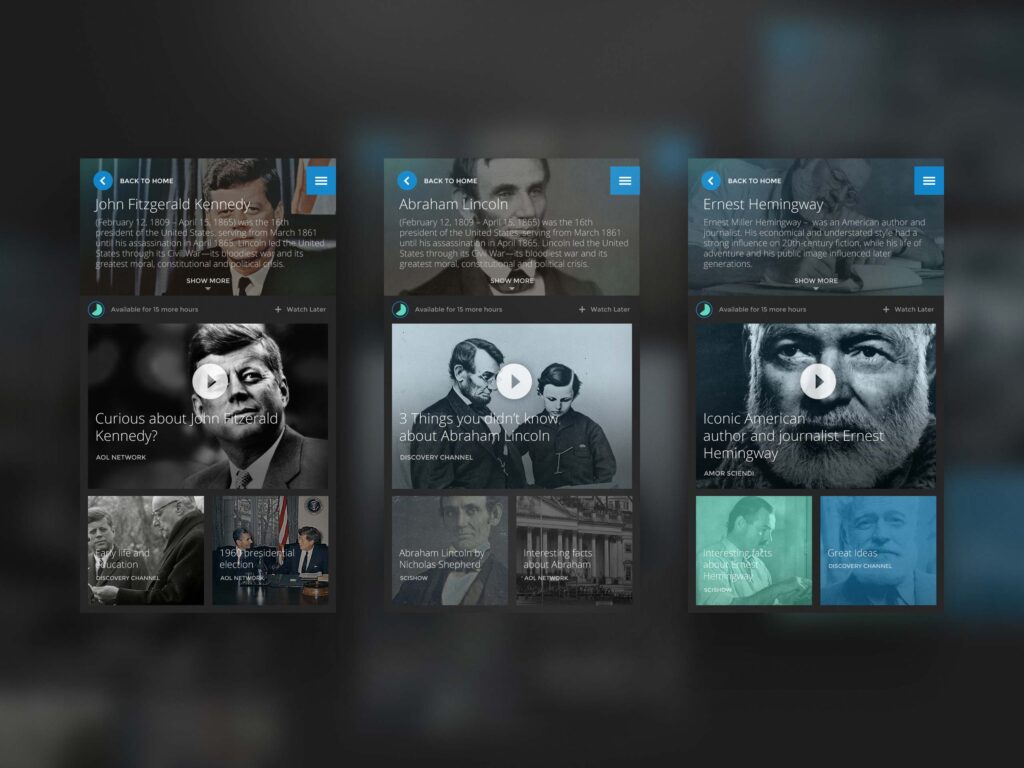
Curiosity
Curiosity

Cycliq